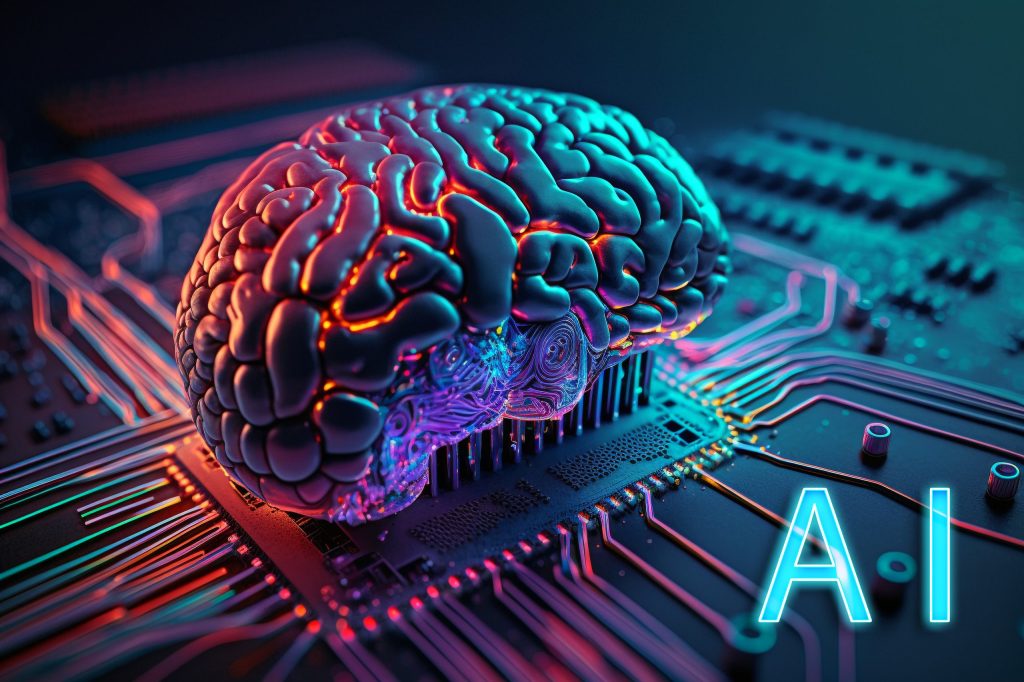
Artificial Intelligence (AI) refers to the creation of intelligent machines that can perform tasks that typically require human intelligence, such as visual perception, speech recognition, decision-making, and language translation. AI algorithms are designed to simulate human cognitive processes, such as learning, reasoning, and self-correction.
There are several different types of AI, including:
- Rule-based AI: This involves creating a set of rules and instructions that the AI system follows to make decisions and take actions.
- Machine learning: This involves training an AI system using large datasets, so it can learn and improve its performance over time.
- Deep learning: This is a type of machine learning that involves using neural networks to simulate the human brain and make more complex decisions.
AI has a wide range of applications in various industries, such as healthcare, finance, manufacturing, and transportation. For example, AI can be used to diagnose medical conditions, automate financial trading, optimize supply chain operations, and develop self-driving cars.
However, AI also raises important ethical and social issues, such as job displacement, bias and fairness, privacy and security, and the impact on human decision-making. Therefore, it is important to develop AI systems that are transparent, accountable, and aligned with human values and goals.
Here are some benefits of artificial intelligence:
- Increased efficiency and productivity in various industries
- Better decision-making based on data-driven insights
- Improved accuracy and precision in complex tasks
- Enhanced customer experiences through personalized recommendations and interactions
- Reduced errors and variability in manufacturing and production processes
- Lower costs and increased revenue through automation and optimization
- Improved healthcare outcomes through diagnosis and treatment recommendations
- Increased safety in high-risk environments through autonomous systems
- Improved cybersecurity through predictive threat detection and prevention
- Better environmental sustainability through optimized resource management and conservation.
 DINOLABS