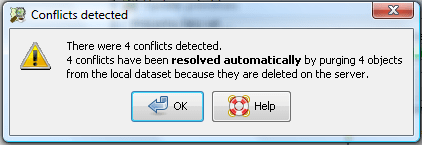
When synchronizing offline applications, data conflicts can arise when the same data is updated in different ways on different devices. Here are ten ways to handle data conflicts when synchronizing offline applications:
- Manual conflict resolution: Prompt the user to resolve the conflict manually by choosing which version of the data to keep. This approach can be time-consuming and error-prone, but it can ensure that the user is in full control of the data.
- Last writer wins: Choose the latest version of the data as the one to keep, overwriting the previous version. This approach is simple but may not be appropriate for all types of data.
- Merge: Merge the changes from both versions of the data into a new version that incorporates all changes. This approach can be complex and may require significant processing power, but it can ensure that all changes are preserved.
- Use timestamps: Use timestamps to determine which version of the data is the most recent, and use that version. This approach can be effective but may require careful handling of time zones and clock drift.
- Use version numbers: Use version numbers to track changes to the data, and choose the highest version number as the most recent version. This approach can be effective but may require careful tracking of version numbers.
- Prioritize certain changes: Define rules to prioritize certain changes over others, based on criteria such as data source or user role. This approach can be effective but may require careful consideration of the criteria used to prioritize changes.
- Rollback: Roll back to a previous version of the data and discard the conflicting changes. This approach can be effective but may result in data loss.
- Combine approaches: Combine two or more of these approaches to handle different types of conflicts in different ways. For example, you might use manual conflict resolution for high-risk data and timestamps for lower-risk data.
- Alert the user: Alert the user when a conflict occurs, providing details of the conflicting data and giving them the option to choose how to resolve it. This approach can be effective but may require careful consideration of how to present the options to the user.
- Use artificial intelligence: Use artificial intelligence and machine learning algorithms to automatically detect and resolve conflicts, based on past patterns and user behavior. This approach can be effective but may require significant computational resources and careful training of the algorithms.
By following these approaches, you can handle data conflicts effectively when synchronizing offline applications.
 DINOLABS