Hey, glad you’re here! Today, let’s dive into the fascinating world of web development and explore the difference between front-end and back-end development. Imagine a website as an iceberg, where the front-end and back-end are the visible and hidden parts, respectively.
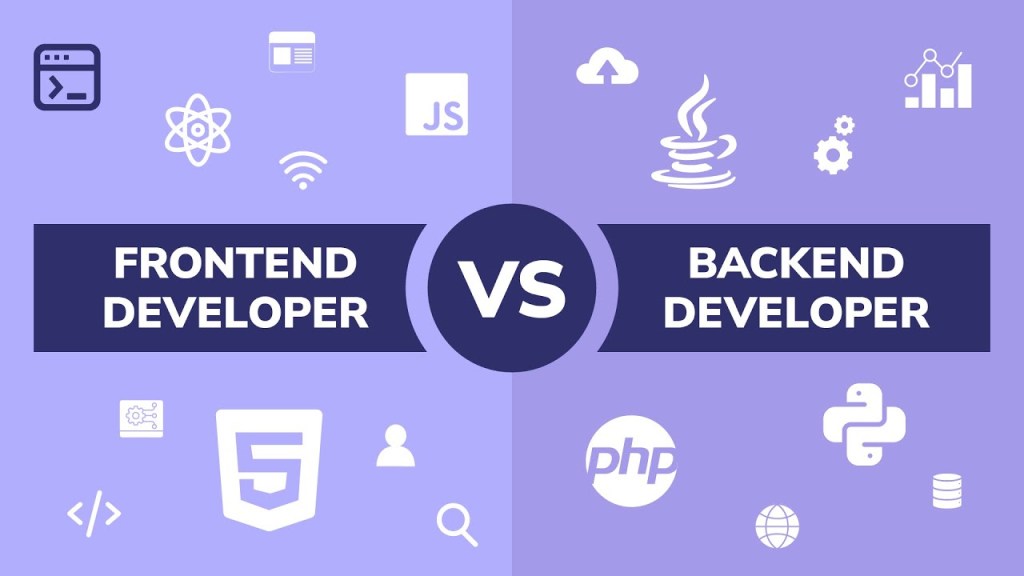
Front-end development, often referred to as client-side development, is all about what you see and interact with on a website. It focuses on creating the user interface (UI) and ensuring a seamless user experience (UX). As a front-end developer, you’ll be responsible for crafting the visual elements, such as layouts, colors, fonts, and animations. Essentially, you bring life to the website’s design!
Think of front-end development as the bridge between a website’s design and its functionality. It involves working with languages like HTML (Hypertext Markup Language), CSS (Cascading Style Sheets), and JavaScript. HTML forms the structural backbone of a web page, CSS adds the styling and layout, while JavaScript adds interactivity and functionality.
Imagine you’re building a house—the front-end development would be the exterior and interior design elements, like the walls, paint, furniture, and decorations. It’s what makes the house visually appealing and enjoyable to be in!
Now, let’s talk about the back-end, also known as server-side development. Just as the name suggests, back-end development deals with all the behind-the-scenes magic that powers a website. It involves handling databases, server configuration, and the logic that drives the website’s functionality. Back-end developers build the foundation upon which the website operates.
Back-end development uses various programming languages and frameworks like Python, Ruby, PHP, Node.js, and Java. These languages enable developers to create complex algorithms, perform database operations, and handle user authentication. They ensure that the website can handle user requests, process data, and provide dynamic content.
Continuing with our house analogy, back-end development is like the electrical, plumbing, and structural components hidden behind the walls. It ensures that everything runs smoothly, provides the necessary resources, and connects the front-end with the server.
Now, let’s step back and take a holistic view. Front-end and back-end development go hand in hand. They complement each other to create a fully functional and visually appealing website. When a user interacts with a website, they experience the combined effort of both front-end and back-end developers.
Imagine you’re ordering a pizza online. The front-end development makes the ordering process user-friendly and visually appealing. You can choose your toppings, customize your order, and see mouthwatering images of delicious pizzas. However, it’s the back-end development that handles the order processing, connects to the database to check for available ingredients, calculates the total cost, and generates an order confirmation.
In conclusion, front-end and back-end development are two sides of the same coin, working together to create amazing websites. While front-end developers focus on crafting the user interface and delivering a delightful experience, back-end developers build the foundation and ensure everything functions smoothly behind the scenes.
 DINOLABS