Continuous Integration (CI) and Continuous Deployment (CD). They’re two buzzwords you might have come across if you’ve been exploring the realms of software development. But fear not, I’m here to break it down for you in a conversational and interactive way!
Picture this: you’re working on a software project with a team of talented developers. Each one of you is coding away, adding new features, and fixing bugs. Now, here’s the challenge: how do you ensure that all the changes made by different team members work well together without causing any major glitches? This is where CI comes into play!
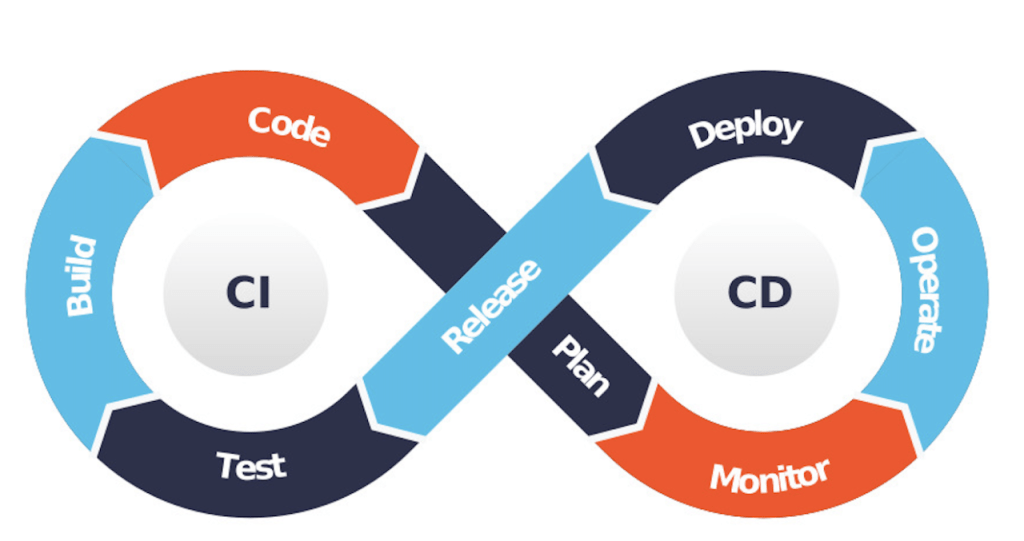
Continuous Integration, or CI for short, is like a superhero that swoops in to save the day. It’s a practice where developers frequently merge their code changes into a shared repository. But it’s not just about merging; CI takes it a step further. Whenever someone pushes their code changes, an automated process kicks in. This process builds the software, runs tests, and checks for any conflicts or issues that might arise due to the integration. This way, you catch problems early on and prevent them from snowballing into bigger headaches later.
Now, let me share a personal experience to illustrate the power of CI. A while back, I was working on a team developing a mobile app. We had developers spread across different time zones, working on various features simultaneously. It was quite challenging to keep everything in sync. But thanks to CI, we had a safety net. Every time someone pushed their changes, our CI system would run a series of automated tests, making sure that the app still functioned as expected.
One day, one of my teammates accidentally introduced a bug while working on a critical component. They didn’t realize it until they pushed the changes. However, thanks to our CI setup, the bug was caught right away. The automated tests failed, signaling that something was off. We quickly identified the issue, fixed it, and retested. All of this happened within minutes, and we avoided a potentially disastrous situation. CI saved us time, effort, and countless headaches. It became an indispensable part of our development process.
Now that we’ve got our code changes validated and integrated seamlessly through CI, what’s next? This is where Continuous Deployment, or CD, takes the stage. CD is like the magic wand that automates the process of deploying your software to production. It ensures that your app is available to users as soon as possible, with minimal manual intervention.
With CD, you can define a pipeline that automates the steps needed to release your software. This includes building the application, running additional tests, packaging it up, and deploying it to your production environment. This process is repeated every time changes pass through CI and are ready for deployment. The goal is to make the release process smooth, reliable, and efficient.
CD is a game-changer, especially when you’re working on large-scale projects with frequent updates. It eliminates the need for tedious manual deployment processes, reduces the chances of human error, and keeps your software up-to-date in a fast-paced environment. You can focus on adding value to your product while CD handles the technical nitty-gritty of deploying it seamlessly.
 DINOLABS